What separates an investment bank that performs at the top of its game from one that struggles to keep pace? The answer lies in the spaces where bankers work. As deal activity rises, talent expectations shift, and technology changes how deals get done, offices are actively influencing collaboration, learning, and performance.
A deliberate approach to workplace strategy helps firms translate these spaces into practical advantages. Here are the most important trends shaping how investment banks design offices that support people, performance, and growth.
1. Leading through Identity and Culture, Not Scale
Boutique and mid-sized investment banks face an uphill battle in a talent market dominated by global giants, however, competing doesn’t require mirroring the largest players. In fact, leaning into what makes smaller firms distinct is often the advantage. A 2025 industry survey found that leading boutique financial firms scored highly due to cultural factors such as strong mentorship, meaningful training, clearer access to professional growth, and healthier work/life balance.
For workplace strategists, the challenge is to reinforce that identity rather than dilute it. Instead of investing in showpiece amenities designed to “keep up with the Joneses,” smaller firms can differentiate through environments that support visibility, access to leadership, and opportunities to learn—spaces that reflect the firm’s ethos and make its strengths more tangible.
2. Building Flexibility for a Dealmaking Surge
Deal activity is back in force, with banking jobs surging in response to a spike in M&A and IPOs. Firms are expanding teams quickly to support new deals, creating a dynamic environment where headcount and functional needs can shift almost overnight.
To stay ahead, offices need to be as agile as the business itself. Flexible, scalable spaces allow firms to integrate new hires, support cross-functional deal teams, and maintain productivity even during periods of rapid growth. Modular layouts, adaptable floors, and neighborhood-style work zones help firms respond to evolving business demands while preserving the collaboration and focus that deal-making requires.
3. Facilitating Mentorship While Preserving Focus
Junior bankers, analysts, and associates form the backbone of investment banking. As banks scale and hybrid work reshapes daily rhythms, supporting structured mentorship while maintaining productive work environments has become a central challenge. Balancing quiet, heads-down work with spaces that encourage collaboration and informal learning is critical.
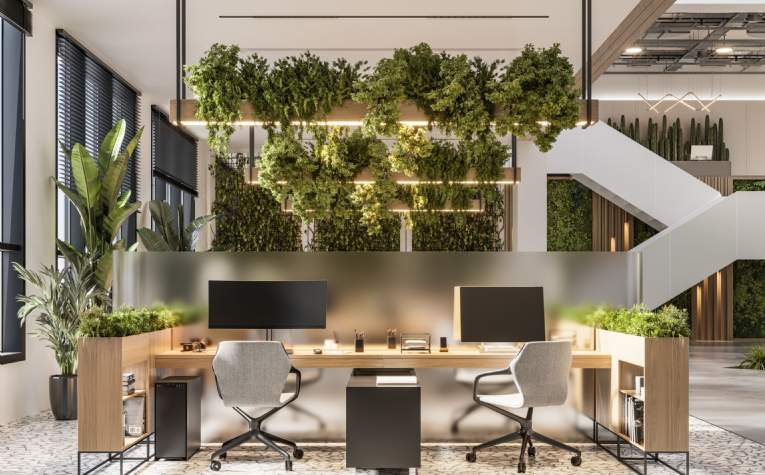
Workplace design can turn this challenge into an advantage. By creating zones for focused work alongside small meeting or pairing areas for mentorship, firms can integrate learning seamlessly into daily routines. These environments help junior staff gain exposure to senior leaders, accelerate skill development, and feel supported in their growth, all while maintaining productivity across the team.
4. Elevating Wellness and Sustainability to Attract Talent
The new 270 Park Avenue headquarters for JPMorgan Chase illustrates how wellness and sustainability can serve as meaningful differentiators for banks seeking to attract and retain talent. Offices that combine natural light, fitness and wellness amenities, flexible workspaces, and environmentally conscious design signal a commitment to both employee wellbeing and corporate responsibility. At 270 Park, these elements are paired with select access-controlled amenities—a subtle use of exclusivity that many firms now employ to elevate the employee experience and strengthen their brand.
Sustainability is increasingly central to business strategy. A 2025 BNP Paribas survey found that 84 percent of global institutional investors expect ESG priorities to accelerate through 2030, highlighting the importance of environmentally responsible practices across financial firms. This trend is mirrored in the U.S., where over 90 percent of North American asset owners surveyed say they plan to grow their allocations to sustainable investments in the coming years, underscoring robust domestic interest in ESG strategies.
Beyond aesthetics or perks, these features communicate each firm’s values. Thoughtfully designed spaces that promote health, encourage movement, and reflect sustainable practices can enhance workplace satisfaction, support employee retention, and position the firm as a forward-thinking choice for top talent.
5. Preparing for AI-Driven Workforce Disruption
AI is no longer a distant prospect—it’s starting to reshape how deals are executed and how teams are structured across investment banking. While banks continue to rely on human dealmakers today, firms are actively investing in AI and “digital employees” to increase productivity and streamline deal execution.
For banks, this means preparing workplaces that can accommodate evolving roles and a growing mix of technologists and traditional bankers with different working styles and expectations. Offices designed to support reskilling, collaboration, and knowledge sharing help ensure that teams can adapt as AI changes workflows. Flexible learning spaces, technology-equipped collaboration zones, and areas for mentoring or skill development allow employees to integrate new tools effectively, maintain high performance, and continue contributing to deal-making success.
Where Culture, Performance, and Growth Intersect
In the investment banking workplace, details matter. Where a mentor meets a junior analyst, how teams are grouped for deal execution, and how wellness and flexible spaces are integrated all influence productivity, engagement, and retention. Thoughtful planning and flexible design decisions can make everyday work smoother and more effective for bankers at every level.
Every advantage counts in this high-performing sector, and the workplace meaningfully influences the outcomes that matter most: talent that stays, teams that move fast, and deals that get done. Firms that pay attention to these details send a simple message: we value how you work, and we’ve built the space to help you do it well.